Small particles.Big possibilities. Wire up a wild idea. Mix a little chaos. Build a world, then find out what makes it tick.
Windows desktop Active development Your experiments. Your rules.
01 / ∞
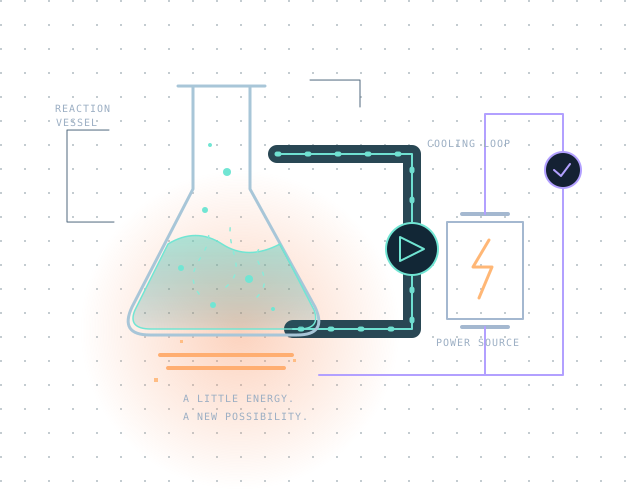
MATTER → ENERGY → MOTION Concept illustration
CHEMISTRY ✦ CIRCUITS ✦ FLUIDS ✦ MECHANICS ✦ WHAT IF?
More than falling particles
One sandbox. From your first beaker to your most ambitious machine, follow an idea wherever it takes you.
A whole world of matter Paint with solids, liquids and gases. Combine materials and see what your experiment becomes.
Browse the material library and pick directly from your world. Explore this feature ↗
Make a reaction happen Dissolve solids, work with acids and bases, and explore heat-releasing and heat-absorbing processes.
Inspect dissolved contents instead of guessing what is in the liquid. Explore this feature ↗
Build something that works Place batteries, wire components and build logic. Follow voltage, current and power through your design.
Resize components and reach settings directly from the world. Explore this feature ↗
Go with the flow Connect pipes, pumps and filters. Build a cooling loop or a pressure vessel and see where the fluid goes.
Shape the apparatus around your experiment. Explore this feature ↗
Turn up the energy Heat it, cool it, boil it. Explore changing phases, pressure and the aftermath of an explosion.
Switch overlays to look beyond the surface. Explore this feature ↗
Put your ideas in motion Grab bodies, experiment with gravity and build structures that can move, deform or break.
Go from a static sketch to a moving contraption. Explore this feature ↗
See what is really happening Pin measurements to regions, compare temperatures and inspect material composition as you build.
Move and resize your observation regions alongside the experiment. Explore this feature ↗
Make the lab your own Arrange panels, save experiments and reuse creations. Right-click tools for relevant controls.
Spend less time in menus and more time making things. Explore this feature ↗ Phoenix is an experimental game, not a validated engineering or laboratory safety tool. Features and simulation behavior are still evolving.
Two places to start
Step into an experiment. A closer look at two original built-in worlds. Explore them from the Maps menu in the desktop game.
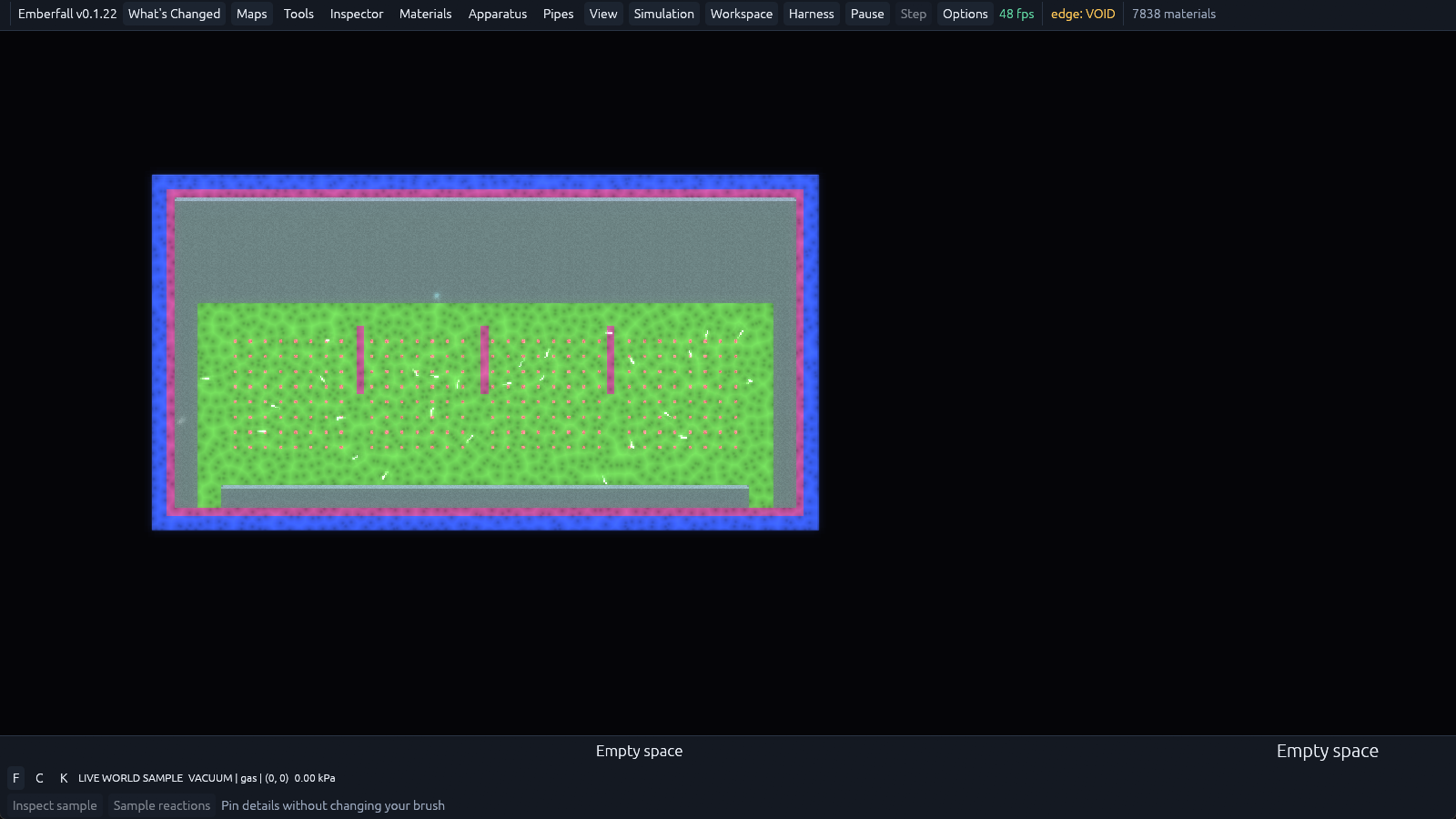
Built-in world Reactor A pool-style reactor scene with a material lattice, surrounding water and control structures. A compact starting point for watching energy and particles interact.
Explore Reactor ↗ Actual gameplay capture from a development build.
Built-in world Orbital The original layered planet scene puts material structure and radial gravity into one world. Explore the planet and its surrounding bodies, then change one condition at a time.
Explore Orbital ↗ Original built-in scene. Gameplay image not yet available.
Build. Observe. Try something else.
Good experiments start 01 Keep your cool. Connect a pump and pipes. Route fluid around a heat source. Watch the temperatures and refine your loop.
Explore cooling worlds ↗ 02 Make the connection. Place a battery, build a circuit and turn a simple switch into a more elaborate logic experiment.
Explore circuit worlds ↗ 03 Look a little closer. Mix a solution, add a measurement region and track the contents as you heat or cool your creation.
Explore chemistry worlds ↗ Curiosity is the only prerequisite.
What will you make happen?